


No Search Result

Connect with us by clicking on one of the following options.
 Sales Enquiry Visit Contact Page
 Grievance Officer grievance_officer@raychemrpg.com
- Other Enquiry info@raychemrpg.com
 Chat with Us Mon. to Sat. 9am to 6pm

-

-
Your List Is Empty
- View Products
How Poor Gland Management Causes Electrical Junction Box Failures
20 November 2026

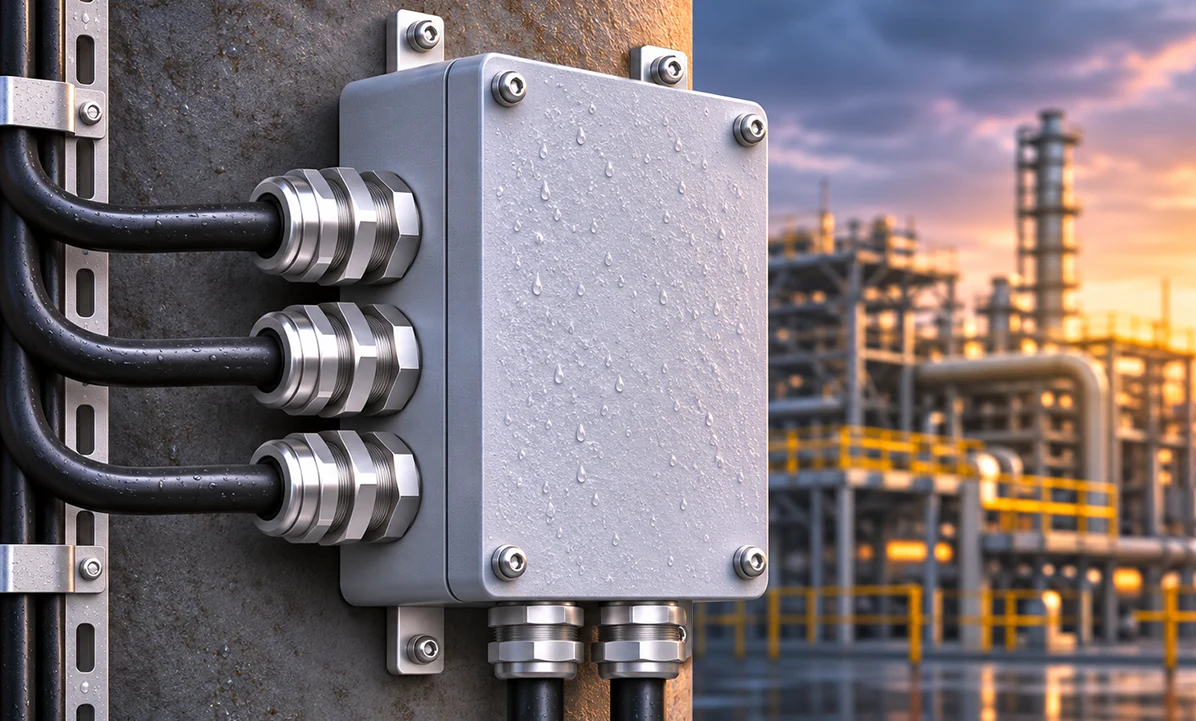
In industrial electrical installations, we often focus on the big-ticket items.
We spend weeks selecting the perfect high-voltage transformer, calculating the load for an industrial junction box, or ensuring the switchgear is top-of-the-line.
Yet, more often than not, the failure that brings an entire plant to a standstill doesn't start with a massive surge or a component meltdown. It starts at the entry point, the humble cable gland.
Think of an electrical junction box as a fortress. It is designed to keep the sensitive connections inside safe from the chaos of the outside world. But every fortress has a gate, and if that gate doesn't seal properly, the fortress eventually falls.
In our world, the gate is the cable glands. Poor management of these small components is one of the leading causes of system failure, and today, we’re going to look at why that happens and how to prevent it.
The Role of Electrical Gland
Before we can talk about failure, we have to understand what success looks like.
Many people mistakenly believe that electrical glands are just fancy nuts and bolts used to plug a hole in a box. In reality, they perform three vital safety functions.
First is strain relief. Cables in industrial environments are often subject to vibration or accidental pulling. Without a proper cable gland termination, that tension goes straight to the internal terminals, leading to loose wires and sparking.
Second is environmental sealing. Whether it is an outdoor junction box in a rainy coastal area or a dusty cement factory, the gland must maintain the box's IP (Ingress Protection) rating. Finally, there is earth continuity.
For an armoured cable gland, the gland itself must provide a low-resistance path to the ground to ensure safety during a fault.
Common Gland Management Mistakes
If glands are so important, why do they fail so often?
Usually, it comes down to human error and a lack of understanding of the different types of cable glands.
One of the most frequent mistakes is the one-size-fits-all approach. Using a gland that is slightly too large for the cable diameter means the inner seal won't compress fully. This leaves a microscopic gap, an open invitation for moisture.
On the flip side, over-tightening a single compression cable gland can be just as dangerous. Excessive torque can crush the cable’s outer sheath, compromising the insulation before the power is even turned on.
Another common issue is ignoring the environment. Installing a standard nylon gland on a waterproof electrical box that sits in direct sunlight will lead to UV degradation. Within a year, that gland will crack, and your waterproof box will become a bucket for rainwater.
The Domino Effect of Failure
What actually happens inside an electrical junction box when a gland fails? It’s usually a slow, invisible process.
It starts with breathing.
As the equipment inside the box heats up and cools down, it creates a pressure differential. If a cable gland termination is loose, the box inhales humid air from the outside. That humidity condenses into water droplets on the cold internal walls.
Over months, this moisture corrodes the copper terminals, increasing resistance. Increased resistance creates heat, and eventually, the connection burns out or shorts.
In more extreme cases, especially with an outdoor junction box, heavy rain can find its way directly down the cable and into the enclosure if the shroud isn't fitted correctly.
Once water reaches the live busbars, the result is an immediate, explosive short circuit.
A Guide to Gland Types
To prevent these disasters, you have to match the gland to the application.
Understanding the various electrical cable gland types is essential for any plant manager or technician.
- Single Compression Cable Gland: These are ideal for standard indoor applications where moisture isn't a constant threat. They provide a single seal on the outer sheath of the cable.
- Double Compression Glands: These are the gold standard for high-vibration and moisture-heavy zones. They grip the cable in two places, providing extra mechanical strength and a superior seal.
- Brass Cable Glands: When working with metal enclosures or in corrosive environments, brass cable glands are often preferred for their durability and excellent conductive properties for earthing.
- Armoured Cable Gland: These are specifically designed for SWA (Steel Wire Armour) cables. They feature an internal clamping ring that grips the armor, ensuring the cable cannot be pulled out and that the earth path is secure.
The Raychem RPG Advantage
One of the best ways to avoid gland management headaches is to stop treating the gland and the box as separate items.
At Raychem RPG, we view them as a single, integrated system.
Our industrial junction box solutions are engineered to work in perfect harmony with our range of cable glands. When you use a Raychem RPG’s outdoor junction box, the entry threads are precision-machined to ensure a flush, airtight fit with our brass cable glands.
We don't just test the box; we test the entire assembly under extreme pressure to ensure it maintains its IP66 or IP67 rating. By sourcing both components from a single manufacturer, you eliminate the compatibility issues that lead to most field failures.
The Hidden Cost of Cheap Glands
It is tempting to save a few dollars by picking up generic electrical glands from a local hardware supplier. But let’s look at the real math. A high-quality armoured cable gland might cost a few dollars more than a cheap alternative.
However, if that cheap gland fails, the cost of the resulting downtime, the replacement of a fried industrial junction box, and the labor for emergency repairs can run into thousands of dollars.
Furthermore, there is the issue of compliance. Using uncertified types of cable glands can void your insurance policy and leave you liable in the event of an electrical fire.
Quality glands are a small price to pay for the bankability and safety of your infrastructure.
Conclusion
At the end of the day, an electrical junction box is only as good as the glands that serve it. By shifting your focus from just plugging a hole to managing a connection, you can eliminate one of the most common causes of industrial downtime.
Whether you are selecting a single compression cable gland for a simple indoor task or a heavy-duty armoured cable gland for a rugged mining site, the principle remains the same: precision matters.
Partnering with an expert like Raychem RPG ensures that you have the right electrical cable gland types for your specific environment, backed by world-class testing and engineering. Don't let the smallest part of your system be the reason it fails.
Invest in quality glands, and keep the gate to your electrical fortress locked tight.